Repurpose
A virtual closet app that helps you style, maintain, and sustain your wardrobe while building a community committed to prolonging clothing lifecycles.

Role and Team

UX UI Designer — Me
UX Researcher
UX Designer

Deliverables

11 User Interviews
1 Journey Map
70+ Screens
2 App Maps
1 Prototype

Involvement

UX Research
Prototyping
Usability Testing
Wireframing
Information Architect
UI, Visual/ Brand Design

Timeline

3 months
Elevating your style, sustainably, within our virtual closet app — where your wardrobe becomes a source of inspiration, connection, and longevity.
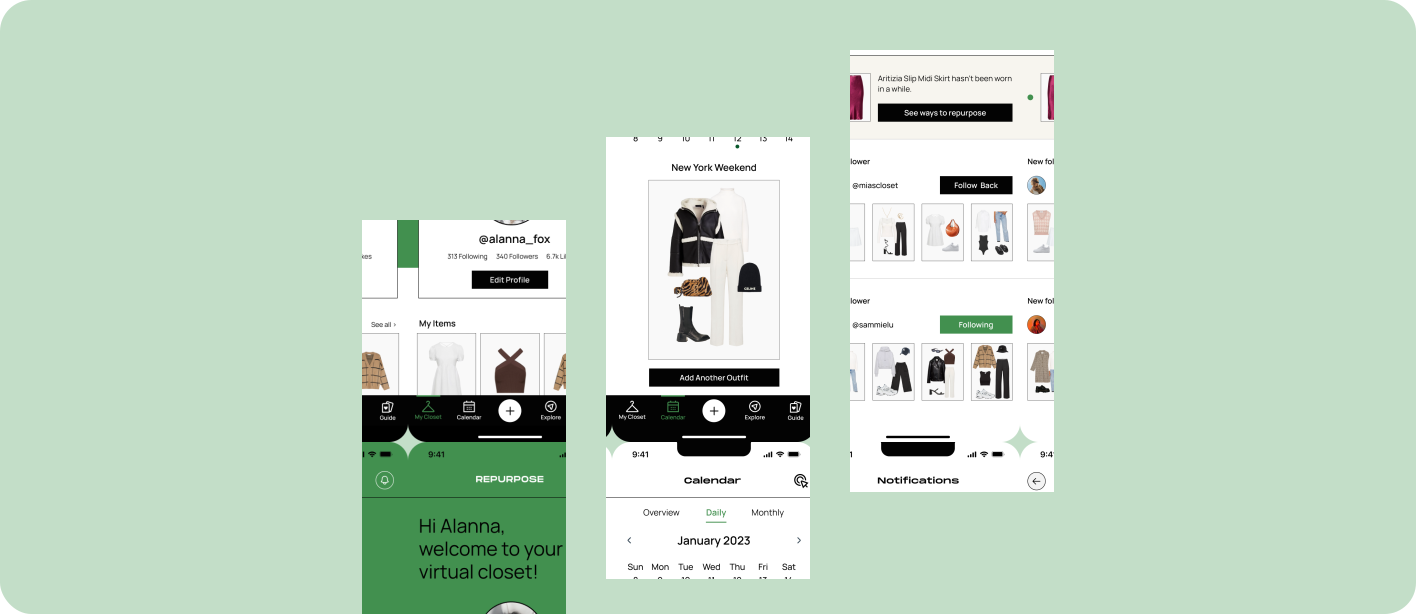
Preview of Repurpose App where user is scrolling through the virtual closet.
01/
Overview
About the Project
The RBC Innovation Challenge: Tech for a Greener Future is a competition or initiative sponsored by the Royal Bank of Canada (RBC) for U of T students to encourage and support innovative solutions aimed at addressing environmental and sustainability challenges.
Problem
The constant emergence of daily fashion trends has led to shorter clothing lifespans. Fast fashion's affordability, accessibility, and rapid style turnover enables wardrobe updates without high costs. However, this convenience encourages clothing disposal, adding to textile waste in landfills.
Goal
The primary goal of this app is to empower users to discover the value in their existing wardrobe, draw inspiration from their fashion network, and provide easy access to resources that assist in prolonging the lifespan of their clothing items.
Solution
A mobile app that streamlines wardrobe management, by simplifying cataloguing and outfit creation, while offering trend insights and style sharing. Users also benefit from comprehensive care guides, wardrobe reminders, and up-cycling ideas, reducing waste and promoting sustainability.
Project Timeline
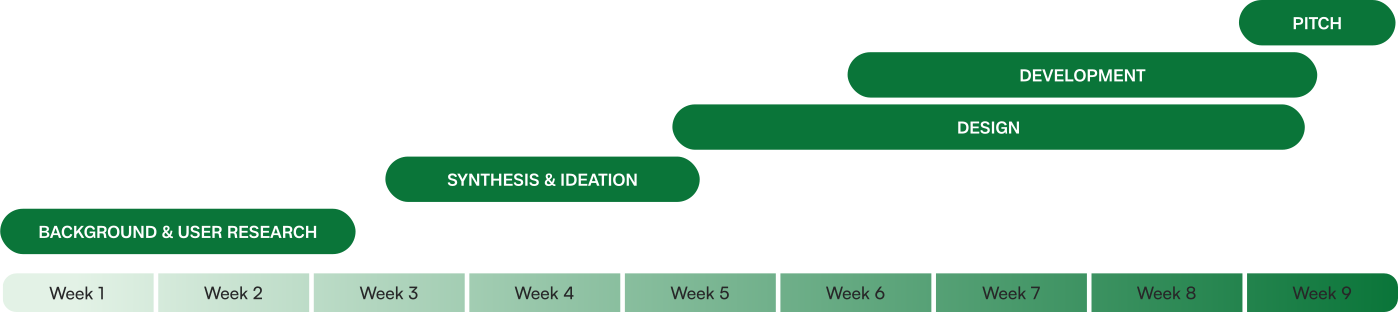
We thoroughly planned our route, covering everything from overarching strategies to the tangible visuals that give life to these concepts.
02/
Discovering
Conducting Preliminary Research
By contextualizing the current fast fashion landscape, our initial goal was to tackle and reduce the consumption of fast fashion…


Given the considerable amount of clothing disposed each year, we aimed to explore the matter further by analyzing statistics related to consumer behaviour and consumption patterns. We found that:
10.5M
tonnes of clothes and textiles are disposed each year in North America.
568%
increased in fast fashion sales from March 2020 to 2022.
50%
of our clothes only get worn, the rest sits unused in our closet
Source
Surveys

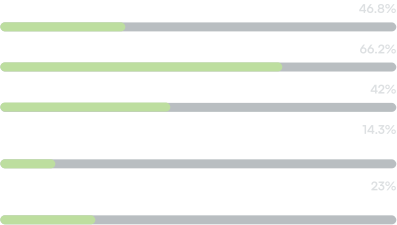
As a team, we looked into the commonalities among the fashion purchasing patterns of young people between the ages of 18 – 30. We conducted a survey with a total of 92 respondents to obtain surface-level insights that answered questions we had regarding the factors that influence consumers’ clothing purchases and sustainable alternatives that they practice.
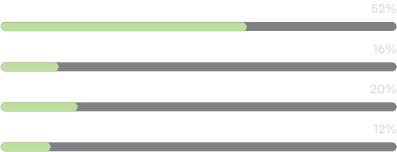
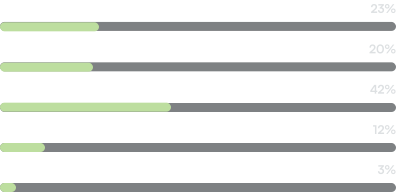
What drives you to purchase fast fashion products?
When you’re tired of a piece of clothing what do you do with it?
Do you practice alternatives to fast fashion? Select all that apply.
The main challenges when it comes to making sustainable fashion choices.
We conducted 5 semi-structured interviews, which further indicated the challenges that consumers face when adopting alternative fashion practices…
Many participants lacked knowledge of which brands prioritize sustainability, leaving them unsure of where to shop responsibly.
“I'm just not well-informed enough to know which brands are sustainable and which ones aren't.”
Rather than make unnecessary purchases for certain events, some individuals choose to borrow clothes or thrift but have concerns with hygiene.
“I borrow clothes for an event - especially if it’s one time. Then I can wear it and return it to my friends.
Affordability is a common concern, especially among students and recent graduates, who may find it hard to justify the higher prices associated with slow-fashion pieces
“I think the biggest thing is price, As a fresh graduate, I don’t think I can afford to have every piece in my closet to be from slow fashion brands.
Fast fashion offers a massive selection of clothing styles, making slow fashion more challenging for individuals to resist the allure of trendiness.
“Slow fashion doesn’t always keep up with fashion trends and have what I want, whereas Shein has things that are cheaper and many different styles to choose from.”
Participants are becoming more aware of the importance of maintaining clothing items, but are also unsure of what steps, products, and measures are needed for specific materials.
“What I'm trying to do is just make better use of the clothes I have now as opposed to supplementing more.”
03/
Defining
Exploring different ideas and understanding what every team member had in mind for our platform.

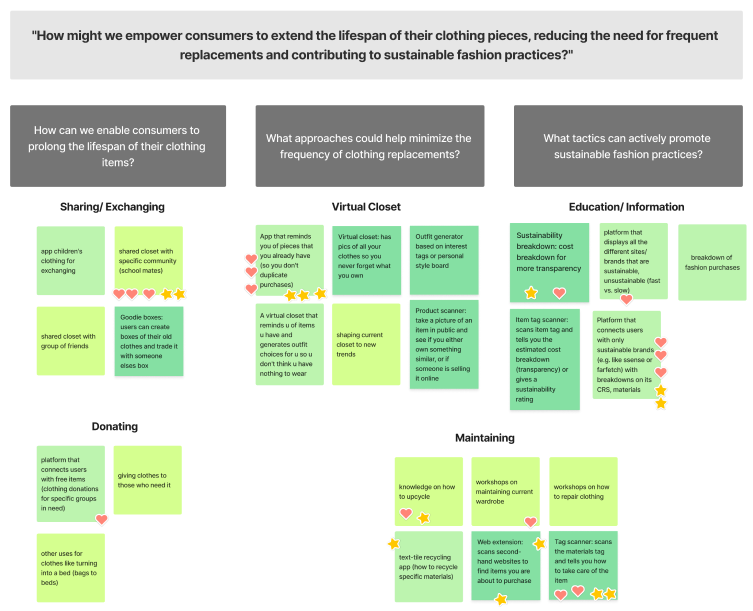
Our journey began with extensive research, including the creation of user personas and user journey maps, which allowed us to empathize with our target audience. To further distill our insights and generate innovative solutions, we applied ideation techniques like “Crazy 8s” for rapid idea generation, prioritization grids to rank potential features, and “Big Dot Voting” to collectively identify top priorities. Common themes that we came across in our solutions were ideas that prolonged clothing lifecycles, maintain clothing articles, and contributing to sustainable fashion practices.
Comparing Features
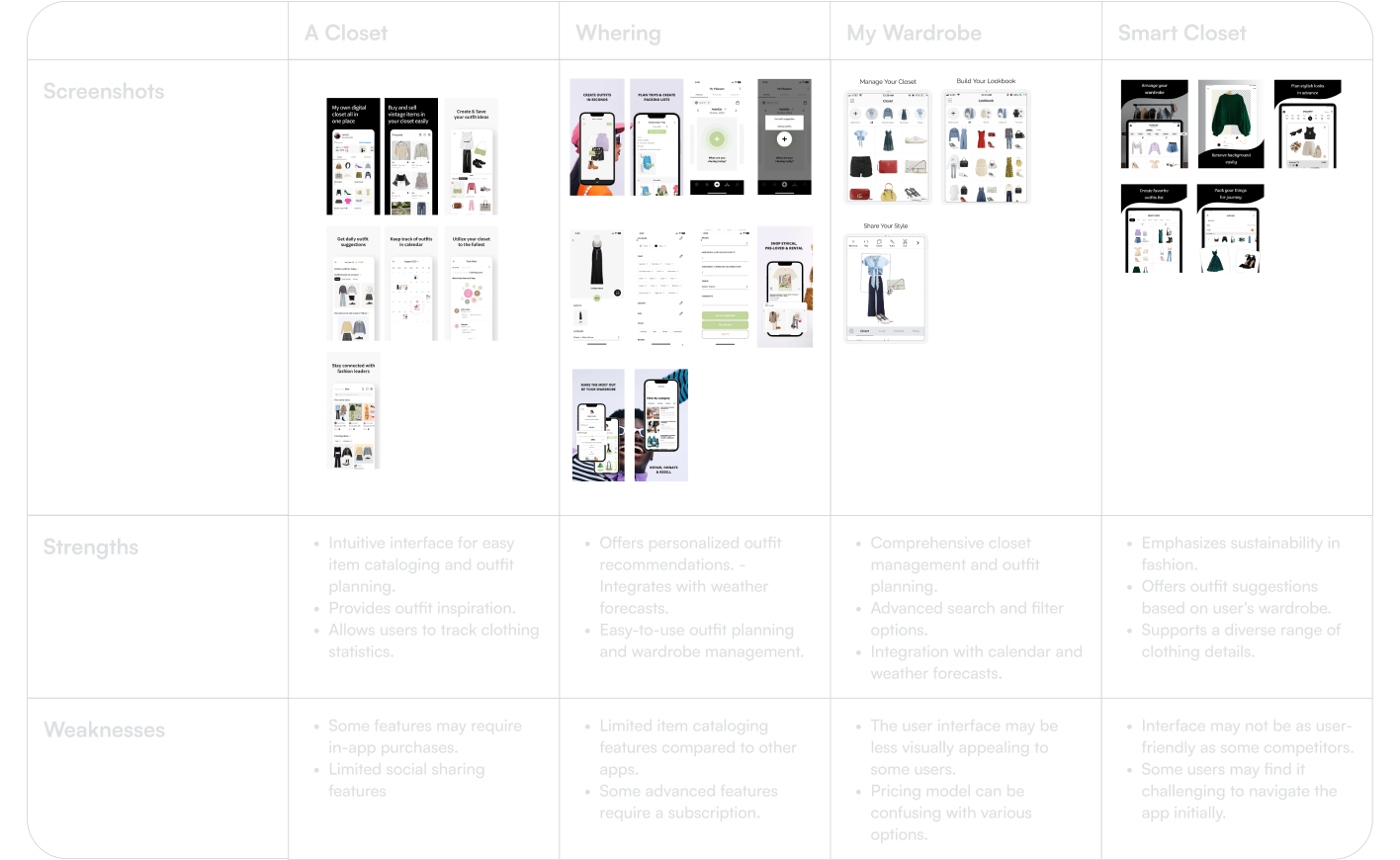
I conducted a competitive analysis to help define the possible gaps of existing products in the market. Through the analysis, I assessed each competitor’s features, target audience, pricing models, strengths, and weaknesses. Using the competitive matrix below, we determined what features were well implemented—and used that information to adjust our product. For features that were implemented ineffectively, we used it to understand how to avoid the same mistakes in the future, and vice versa for features that performed well.
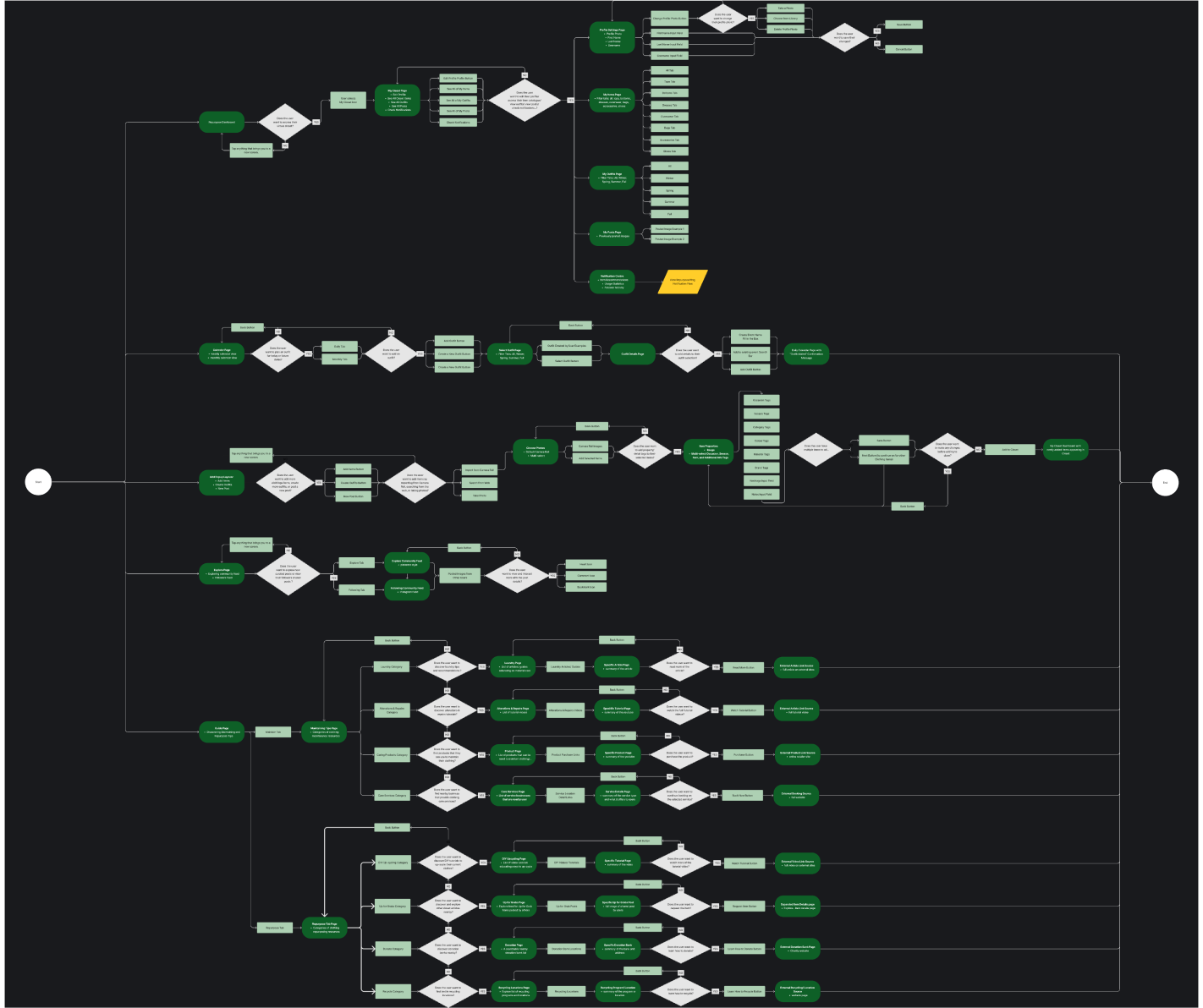
Mapping out the User Flow
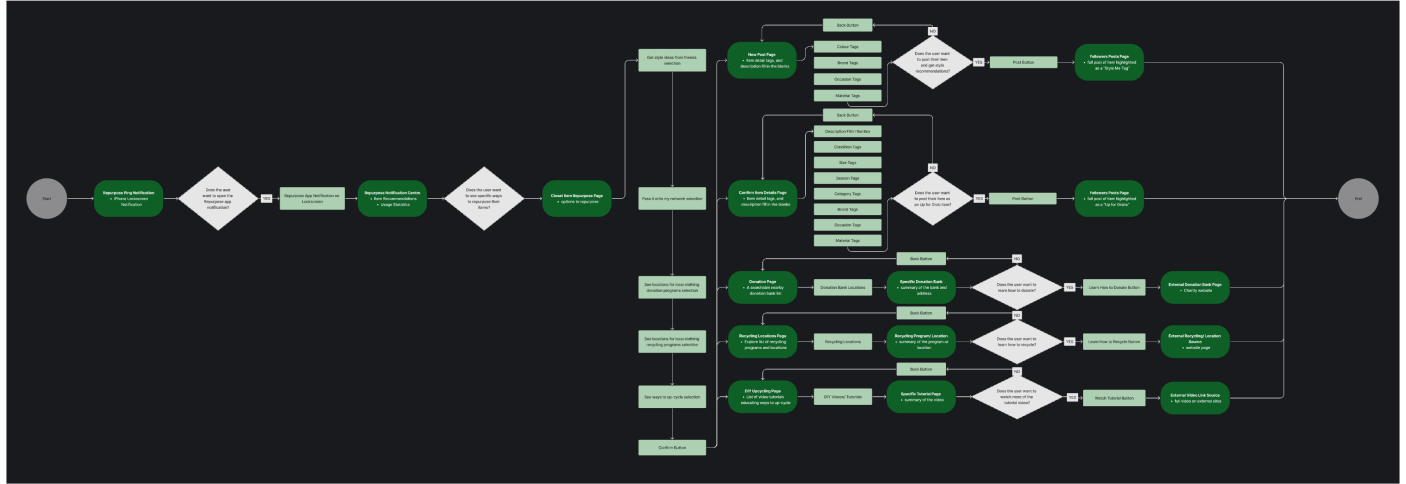
I was responsible for crafting a user flow diagram for our virtual closet app. This involved defining objectives, outlining steps, incorporating decision points, and fine-tuning specific details. Through this diagram, I visualized the user's path for tasks such as adding clothing, outfit planning, accessing care resources, and learning about sustainable disposal methods.

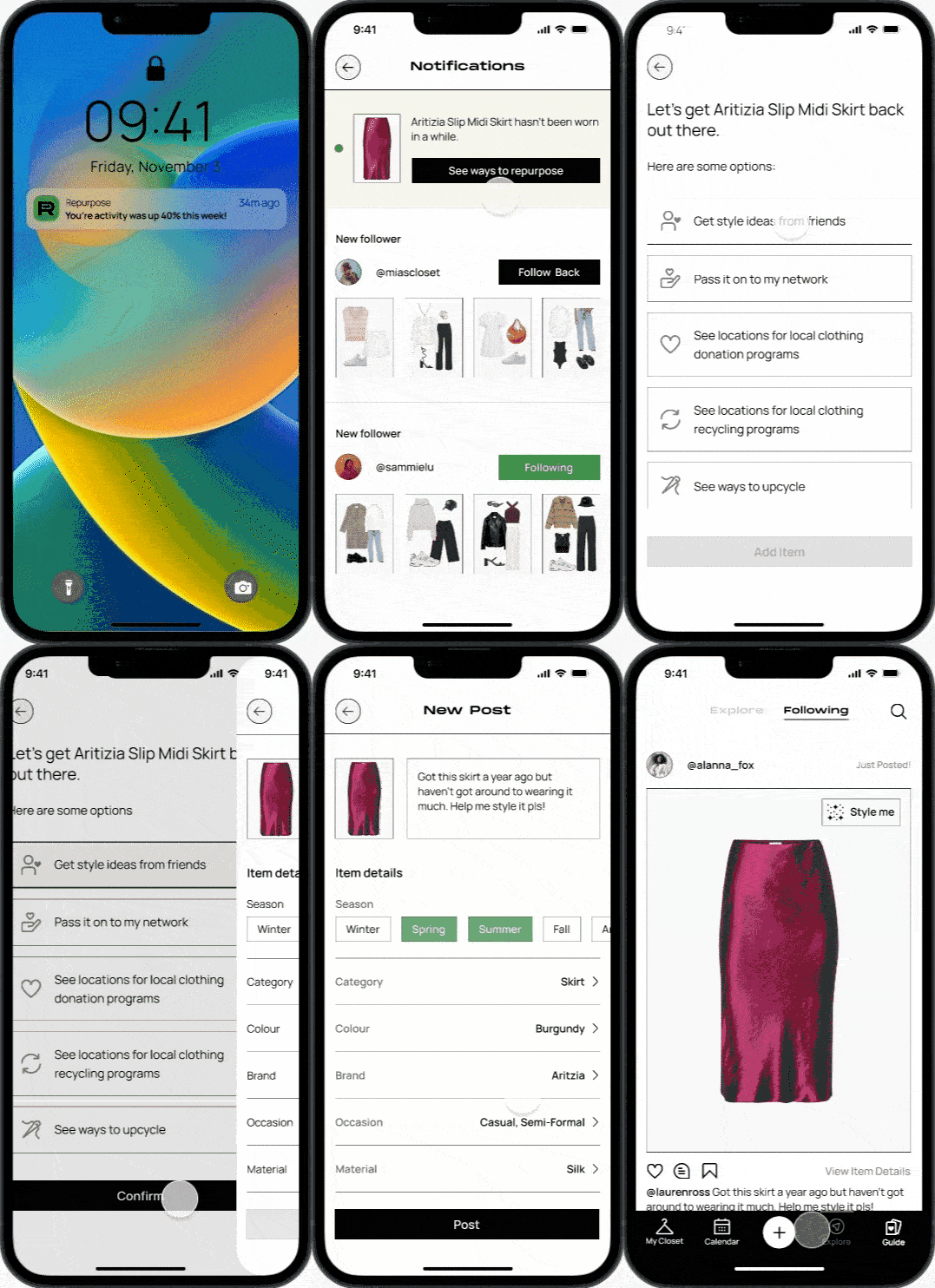
One of our app’s distinctive features is reminding users of their under-utilized wardrobe pieces by providing them with options for revitalization or sustainable disposal. I created a diagram outlining the step-by-step process that users follow when encountering this feature. It begins by sending a reminder notification. Once alerted, users can seamlessly navigate to the app, where they are presented with various choices of creating a post and sharing the item with their fashion community to explore styling tips and ideas from their network. Alternatively, they have the option to access resources for sustainable disposal methods, promoting eco-conscious choices.
04/
Designing
Wire framing our ideas

I began the design process by leading the team in creating medium-fidelity wireframes to test the interactions and flows with users. When creating the mid-fidelity wireframes, I made sure to maintain a clear representation of the interface with consistent elements such as fonts, colours, and spacing to create a cohesive appearance. Ensure a logical layout for users to navigate the flow between screens or pages.

Making Revisions

From the three usability tests that we each conducted, we were able to assess complications users had with our designs, and we made revisions accordingly to our high-fidelity prototype. Below are a few issues that I came across and addressed:
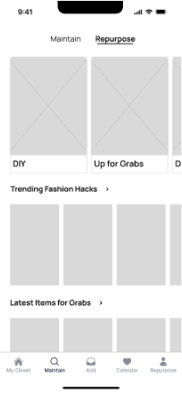
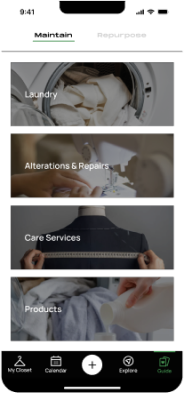
Before
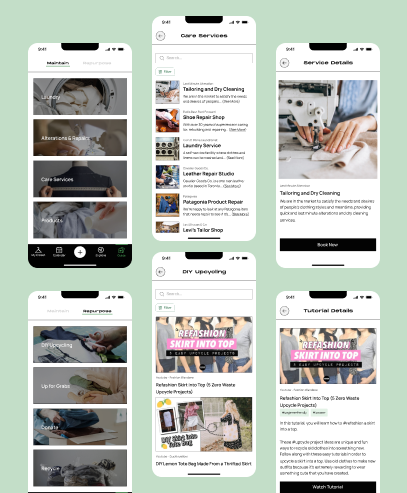
Too much information on both the screens for the “Maintain” and “Repurpose” which made users unsure where to click. Users were also unsure if they should scroll horizontally or vertically.
After
Reduced the number of categories and unified the scrolling actions.
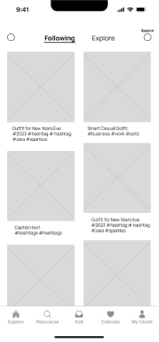
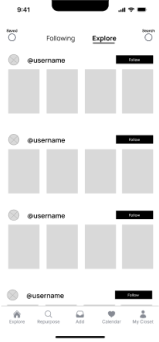
Before
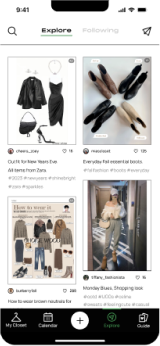
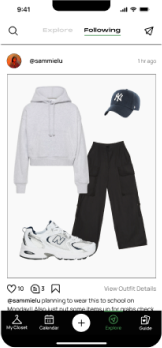
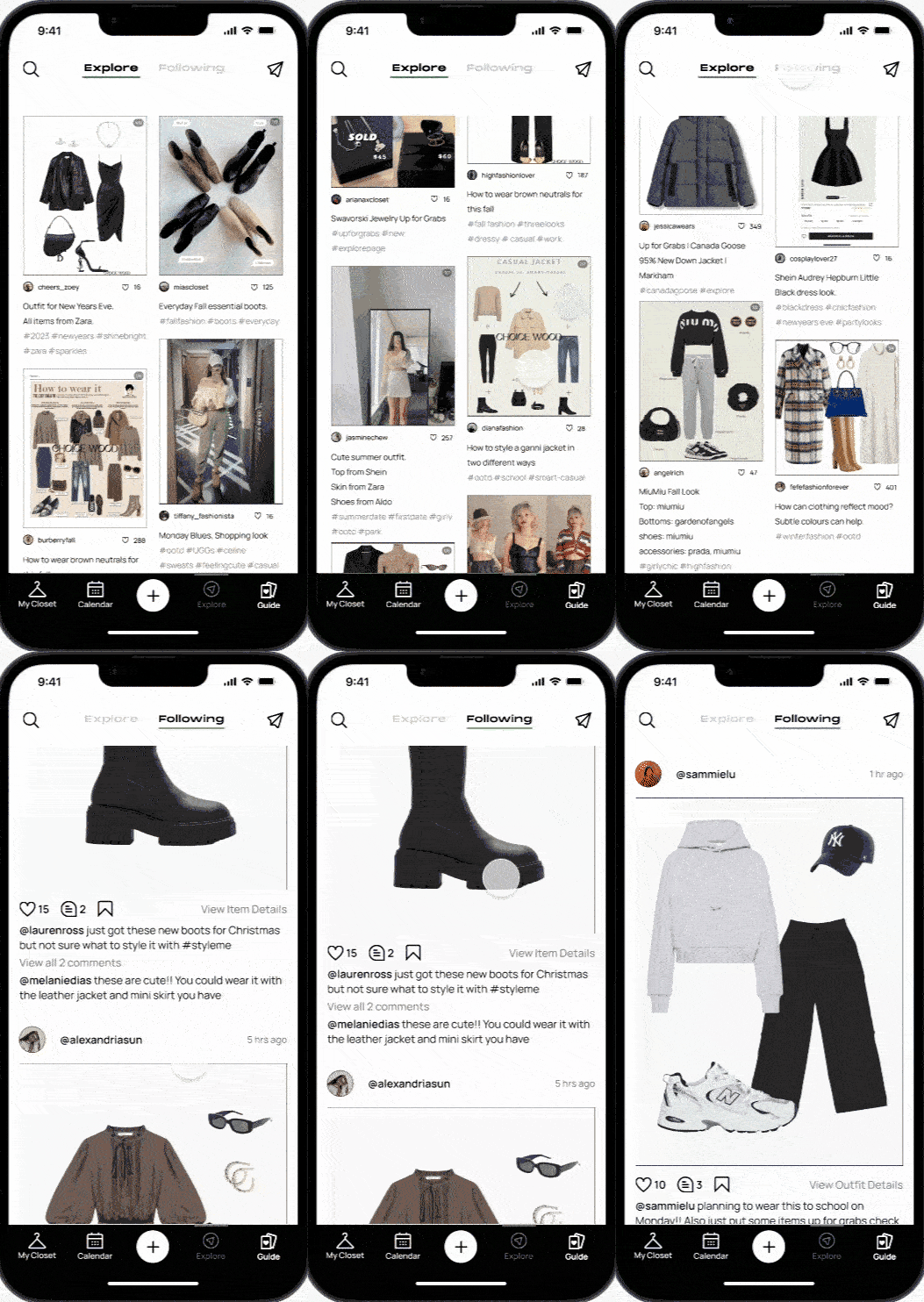
Users encountered difficulty in navigating the 'Following' and 'Explore' pages due to their unfamiliarity with the layout. They anticipated a single-column feed for 'Following' and a double-column feed for 'Explore’ similar to current social media app layouts that they regularly use. 
After
A single-column feed for the 'Following' section and a double-column feed for the 'Explore' section were established, aligning our layout with the conventions seen in other apps for a more consistent user experience.
Before
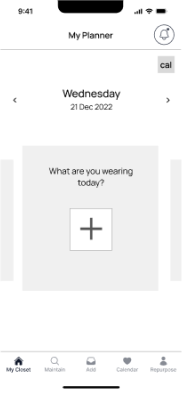
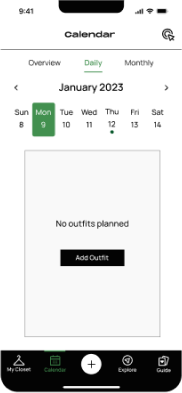
Users experienced confusion due to their unfamiliarity with the call to action and the 'plus' icon on the Outfit Calendar screen, leading to their inability to create and add outfits. The calendar icon was also too hidden, which made it difficult for users to view all their planned outfits.
After
We replaced the ‘plus’ icon with an ‘Add Outfit’ button and introduced 'overview,' 'daily,' and 'monthly' view tabs to enhance user accessibility in reviewing planned outfits for both the current planned day and upcoming days.
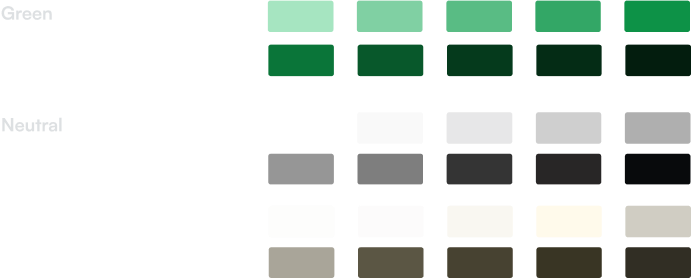
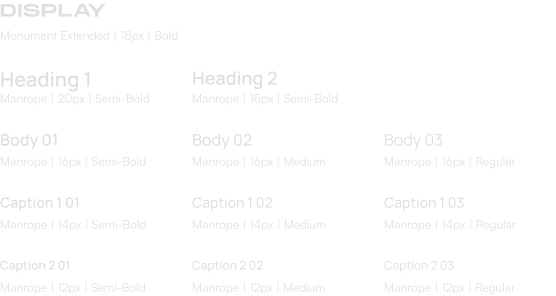
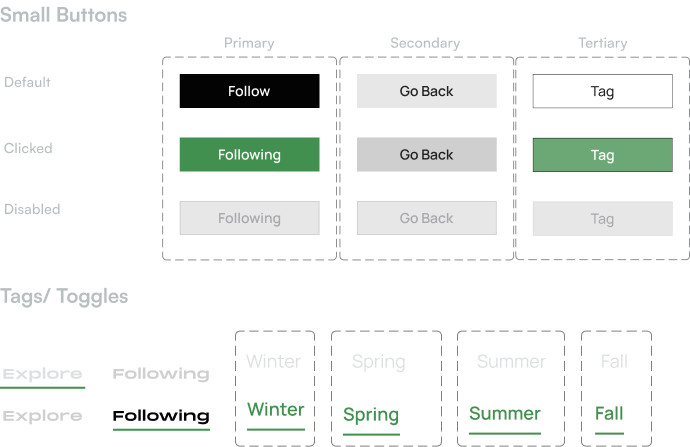
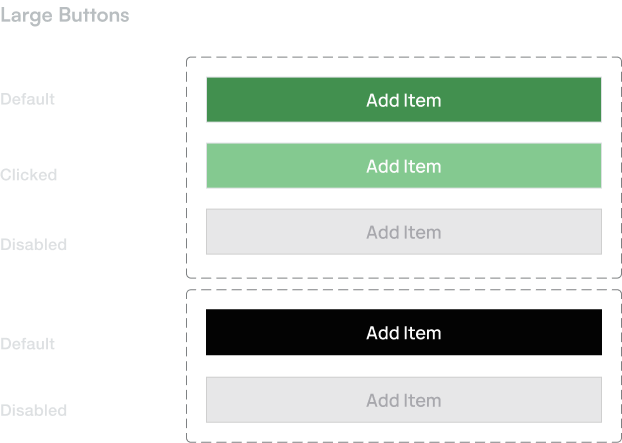
Creating a modern design kit for Repurpose.
As individual features gradually came to life, I led my team in building a design kit to ensure the interface was cohesive throughout the product. All styles of typefaces and colours were chosen to meet our product’s goal of positioning our brand as modern, clean, and straightforward. Inspiration was mainly gathered from existing brands that Millennials and Gen-Z users are familiar with and purchase from.    
05/
Delivering
A Virtual Closet
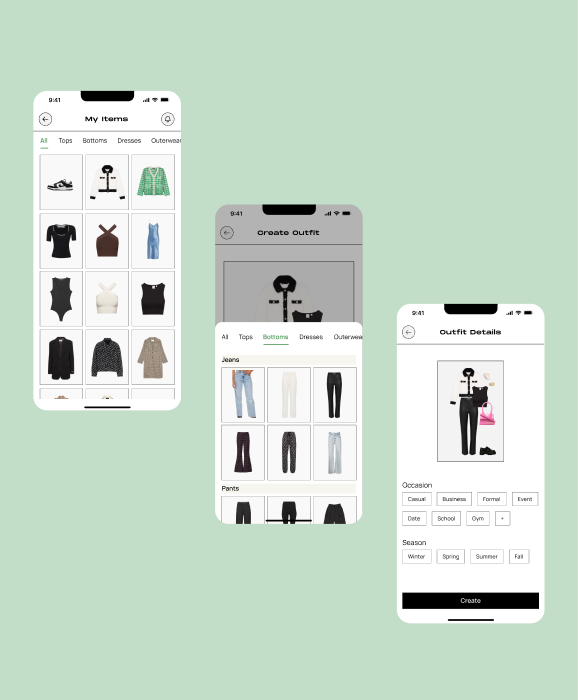
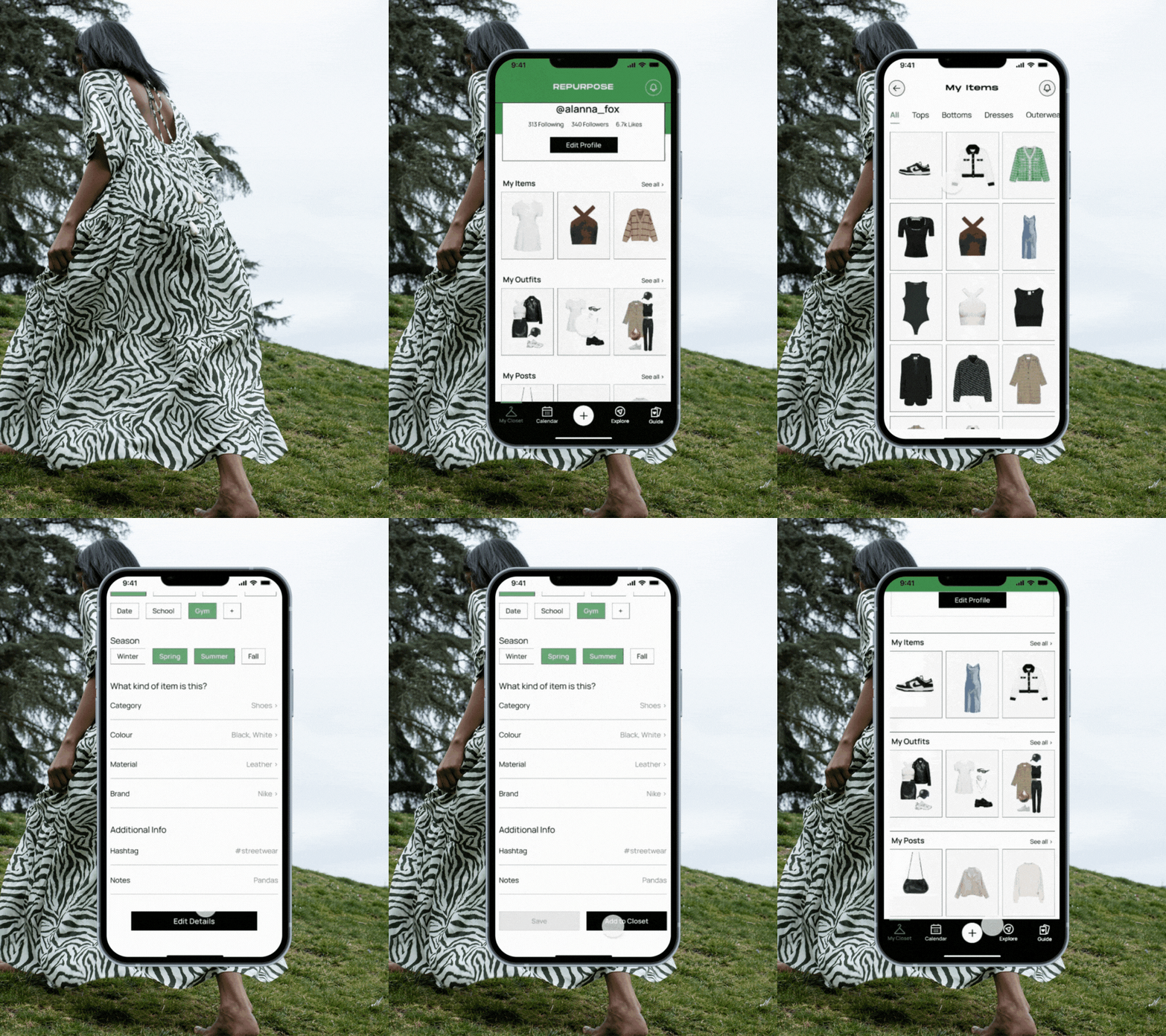
Repurpose streamlines wardrobe management by providing easy ways of cataloguing, searching, outfit creation, and organization of clothing items, making the process efficient, enjoyable, and hassle-free as well as ensuring they always have the perfect outfit on hand.
Effortless Trend Discovering and Sharing
Repurpose allows users to explore the latest trends, share their style, become trendsetters, and engage with a vibrant fashion community, making fashion discovery and sharing a delightful and engaging experience.
Simplifying Clothing Maintenance
Helps users with clothing maintenance by providing accessible care guides. This allows them to understand how to take care of each unique pieces in their closet, with educational tips on how to do laundry and small repairs to maximize the longevity of their items.
Finding Treasures in Your Existing Items
Users receive timely reminders to revitalize overlooked, or no longer loved items in their wardrobe and are presented with multiple ways to give life to their clothing items. Users can seek styling tips from their network, decide to offer the item to their friends and family, or donate to a nearby centre. They can also be inspired by different ways to extend the life of their cherished pieces, whether it be recycling or repurposing.
06/
Reflecting
Energy is Contagious
We began this design challenge with a full team of 6 people, however, due to unforeseen circumstances half of our group dropped out midway through our project timeline. The rest of us were extremely nervous, but I am grateful to my team for not losing hope. It was the drive and passion that each of us had which kept us going throughout this project and helped us push each other.
Reinventing Approaches
One of the biggest lessons our team learned is that it’s okay to have an alternate approach to the original prompt, especially if it can better address the user’s needs. We restructured our approach to go from “tackling the high consumption of fast fashion” to “prolonging the life cycle of clothing”.
Don't Underestimate Organization
This was the first time I lead a project of this type and scale. The deadlines were tight, and the client was demanding. In order to make sure that my team's efforts were well spent, I made and closely followed a Project Plan. It helped me realign with the client when timelines were pushed and allowed my team to successfully deliver the project in time.
// More Work to Explore